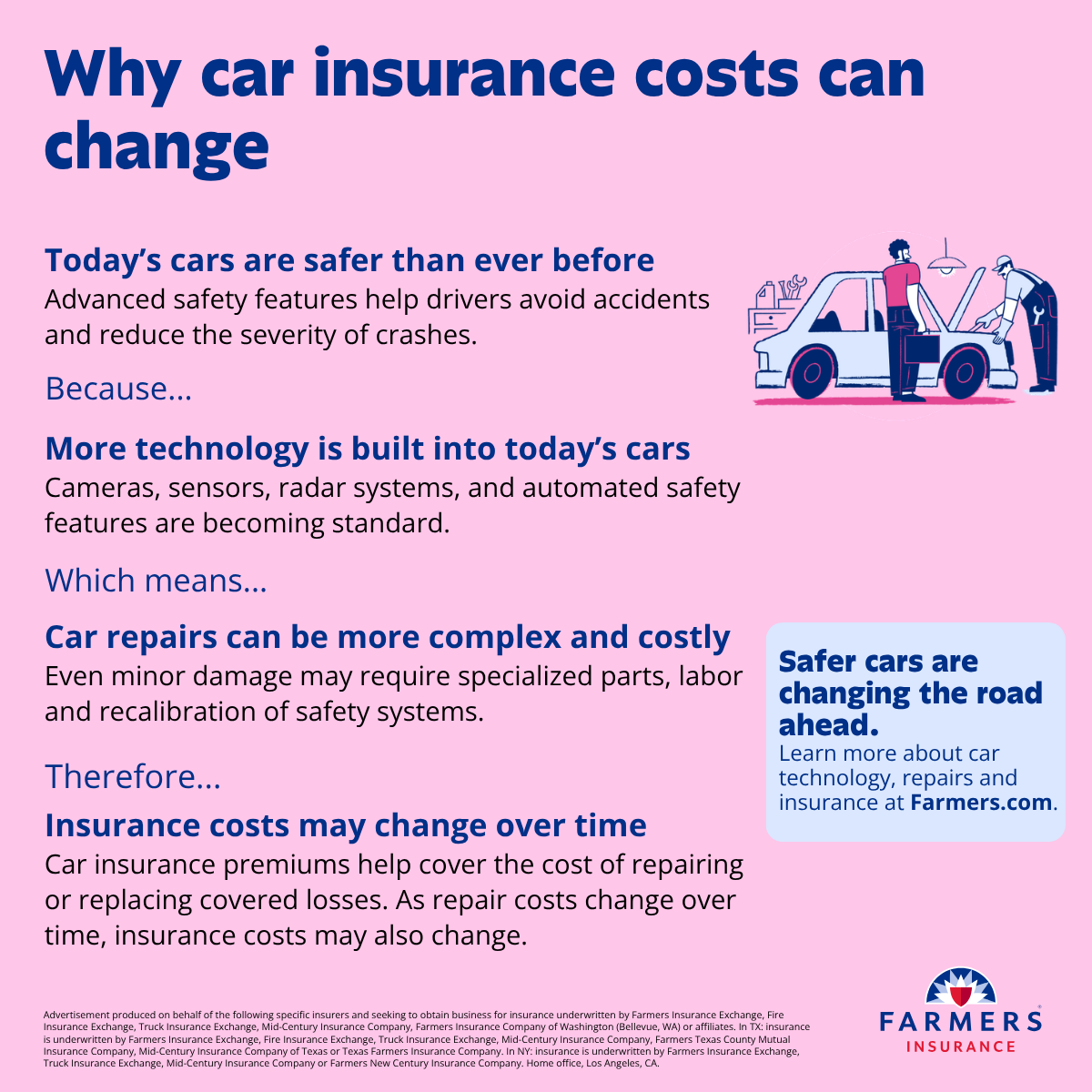
Today's cars are safer than ever
Cars today can do far more than get you from Point A to Point B.
Many cars now include advanced safety features that can help drivers avoid collisions, stay aware of their surroundings and respond to hazards more quickly. Features such as backup cameras, blind spot monitoring and automatic emergency braking are becoming increasingly common—and in some cases, required on new vehicles. Federal requirements already mandate rear visibility technology on new vehicles1, and Automatic Emergency Braking (AEB) is required to become standard on new passenger vehicles by September 20292.
While these technologies may help improve safety, they are also changing how cars are repaired and maintained.
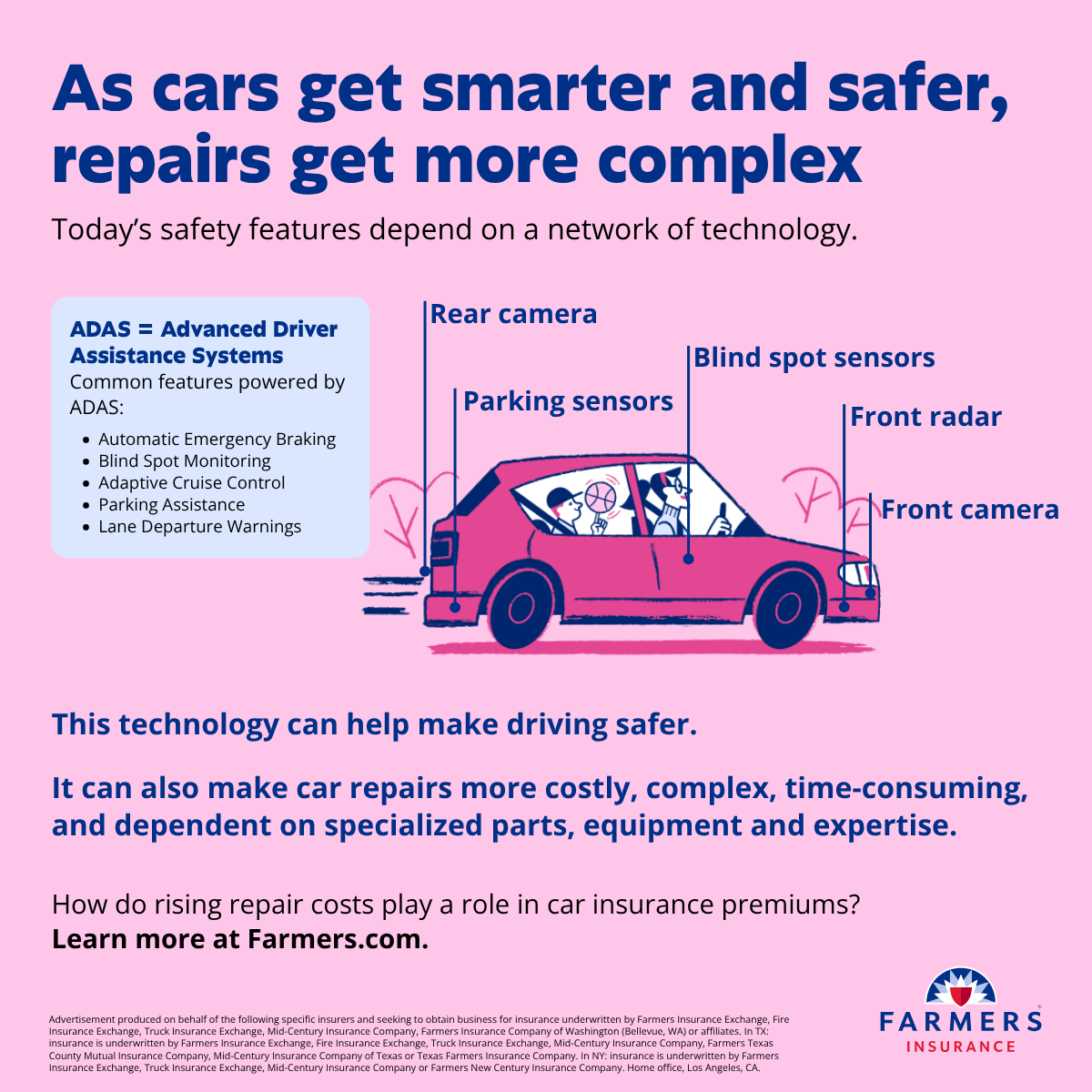
What is ADAS?
ADAS stands for Advanced Driver Assistance Systems.
These systems use cameras, sensors, radar and software to help drivers operate their cars more safely.
Common ADAS features include:
- Backup cameras
- Blind spot monitoring
- Automatic emergency braking
- Adaptive cruise control
- Parking sensors
- Lane departure warnings
- Lane keeping assistance
- Front collision warnings
Many drivers use these features every day without realizing the amount of technology working behind the scenes.
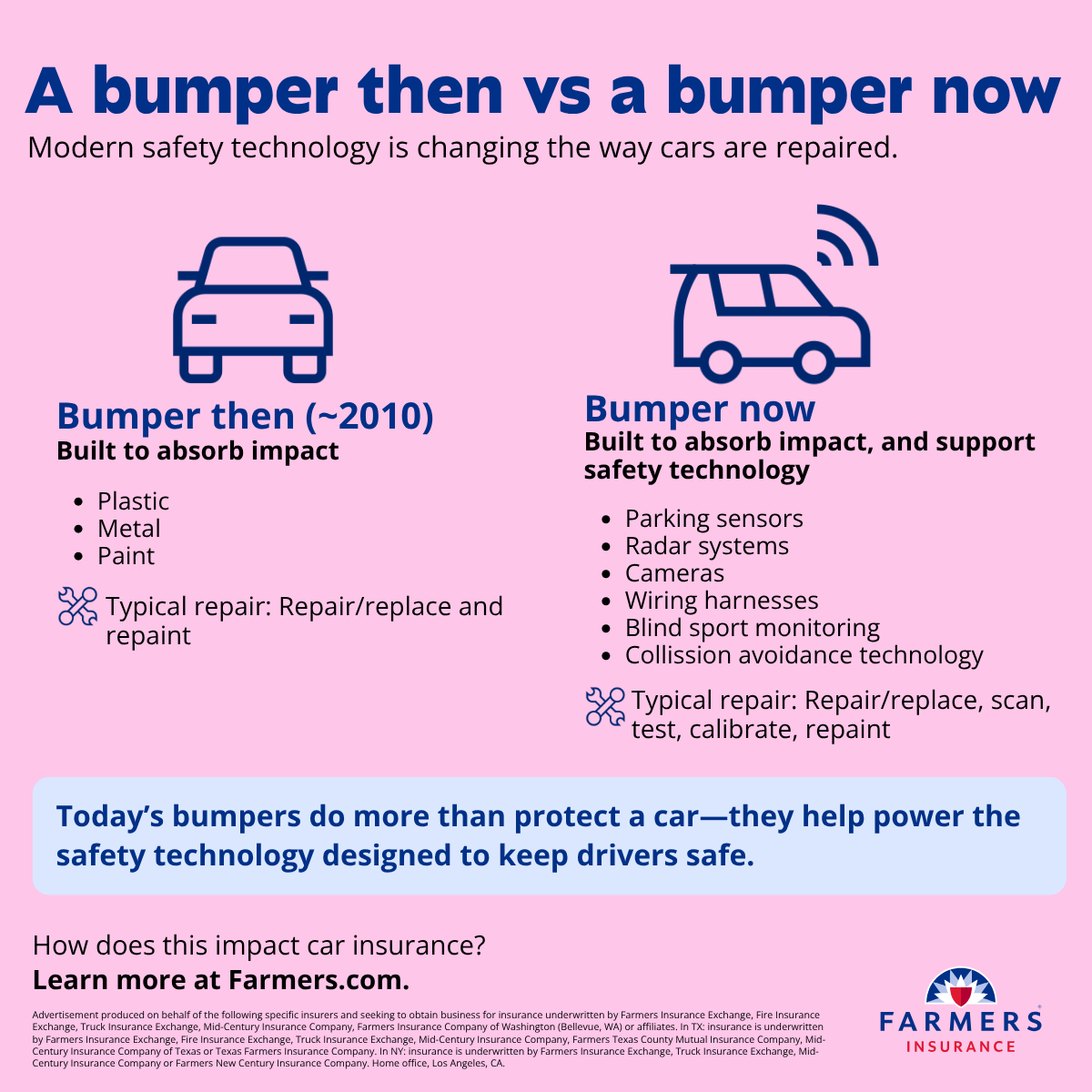
A bumper then vs. a bumper now
Today’s bumpers do more than protect a car. Many new cars have sensors, cameras or radars built into the bumper to help with safety features like parking assist or automatic emergency braking.
For example:
|
A typical bumper in 2010 consisted of
|
|

|
A typical bumper today may include:
|
|
Why it matters
The same technology designed to help prevent accidents can also make repairs more complex after an accident occurs.
Safety technology may impact the cost of car repairs
Car repair costs can rise for many reasons, and advanced safety technology is one factor contributing to repair complexity.
|
Today's cars often contain cameras, sensors
|
|
 As a result, repairs may involve:
According to SAE, a standards development organization serving the mobility industry, calibration helps ensure cameras, radar and other sensors continue working correctly after repairs or component replacement3.
Common ADAS terms explained
ADAS: Advanced Driver Assistance Systems. Technology that helps drivers avoid collisions and improve awareness while driving.
Calibration: The process of checking and adjusting cameras, sensors or radar systems to help ensure they operate correctly after a repair.
Diagnostic Scan: A computer check that looks for trouble codes or issues in a vehicle's electronic systems.
Radar Sensor: A sensor that uses radio waves to detect objects around the car. Often used for adaptive cruise control and automatic emergency braking.
Blind Spot Monitoring: A system that detects cars in areas that may be difficult for a driver to see.
Automatic Emergency Braking (AEB): A system designed to automatically apply the brakes if a collision appears imminent and the driver has not responded2.
Repair
Why It May Be More Complex Today
Windshield replacement
Cameras may be mounted near the windshield and require calibration
Front-end repair
May affect sensors or radar associated with safety systems
Rear bumper repair
May involve parking sensors or rear cameras
Side mirror replacement
May affect blind spot monitoring technology
Parking sensor repair
May require testing or calibration
Repair
Windshield replacement
Why It May Be More Complex Today
Cameras may be mounted near the windshield and require calibration
Repair
Front-end repair
Why It May Be More Complex Today
May affect sensors or radar associated with safety systems
Repair
Rear bumper repair
Why It May Be More Complex Today
May involve parking sensors or rear cameras
Repair
Side mirror replacement
Why It May Be More Complex Today
May affect blind spot monitoring technology
Repair
Parking sensor repair
Why It May Be More Complex Today
May require testing or calibration
Why smarter car technology may call for a fresh look at your car insurance
As car repairs become more complex, understanding insurance coverage can help drivers know what may apply after a covered loss.
Every policy is different, but these are some common coverages drivers may encounter.
Liability Coverage: Helps pay for injuries or property damage you cause to others in a covered car accident.
Collision Coverage: May help pay to repair or replace your car after a covered collision, regardless of fault.
Comprehensive Coverage: May help pay for damage caused by covered events other than collisions, such as hail, theft, vandalism or falling objects.
Uninsured Motorist Coverage: May help provide protection if you're involved in an accident with a driver who does not have insurance.
Underinsured Motorist Coverage: May help when the at-fault driver's insurance limits are not sufficient to cover damages.
Medical Payments Coverage or Personal Injury Protection (where available): May help pay certain medical expenses after a covered accident.
Deductible: The amount you pay out of pocket before your insurance coverage begins contributing to a covered loss.
Coverage availability and requirements vary by state and policy.
Ways drivers can prepare
Review your car insurance coverage regularly. Technology changes quickly. Reviewing your coverage periodically can help ensure it continues to align with your car and budget.
Practice safe driving habits. Safe driving remains one of the most effective ways to help avoid accidents. Drivers can also use telematics tools, such as the Signal® by Farmers® app, to better understand their driving behaviors.
Talk with an agent about potential car insurance savings. Because discounts vary, drivers may want to review their policy with an insurance agent to understand what savings opportunities may be available based on their car, coverage choices and driving habits.
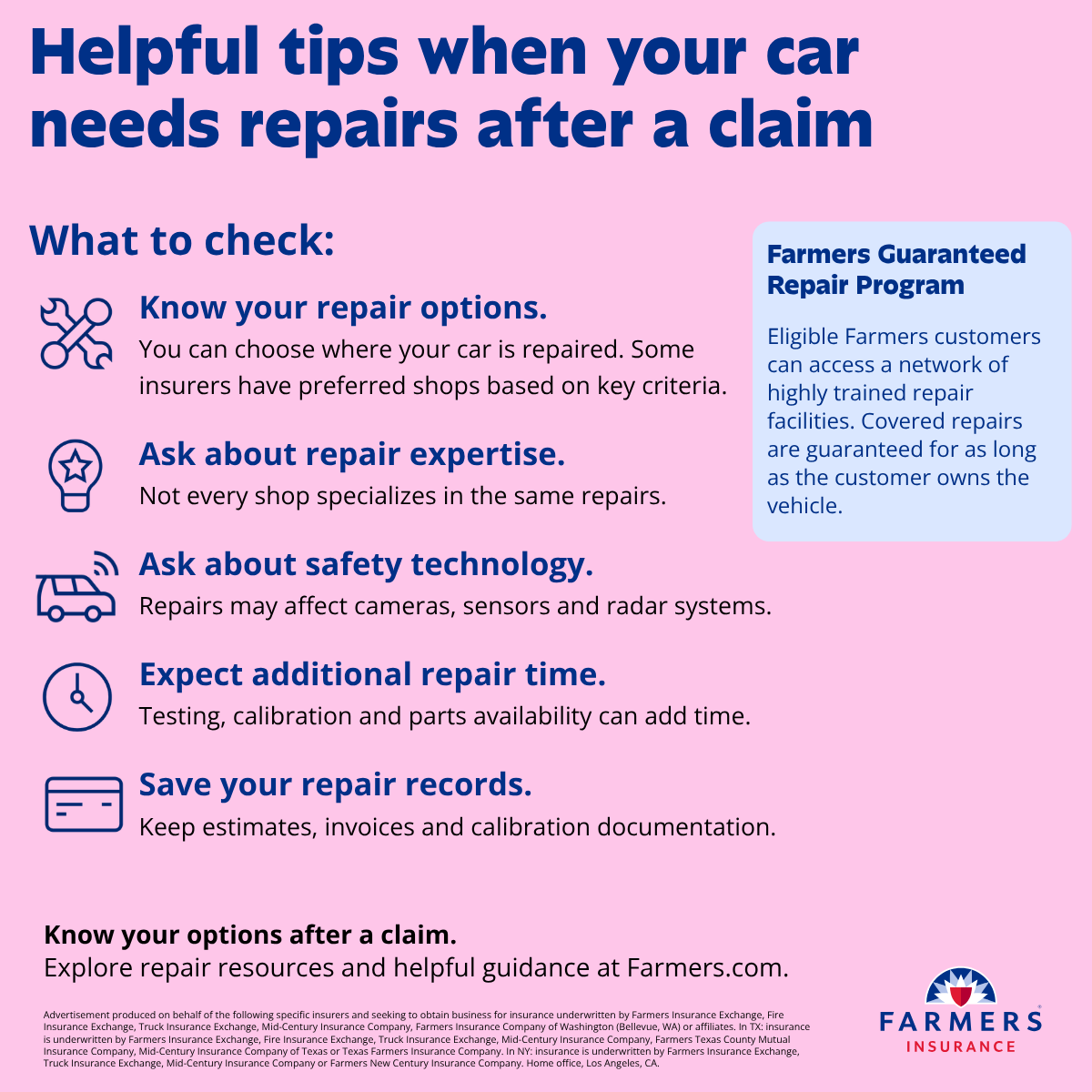
Helpful tips after a car insurance claim
Understand repair shop options. Some insurers may offer customers a list of reputable repair facilities they frequently work with. For example, Farmers offers a Guaranteed Repair Program, giving eligible customers access to a network of highly trained repair facilities and guaranteeing covered repairs for as long as the customer owns the vehicle. However, customers always have the choice of where to have their vehicle repaired.
Ask whether the repair shop has the right expertise. Not all shops handle the same types of repairs. Some specialize in certain vehicles, systems or repairs, while others may need to transfer the vehicle to another facility for specific work.
Ask whether safety technology may be affected. Cameras, sensors and radar systems can be built into windshields, bumpers, mirrors and other common repair areas.
Plan for possible added repair time. Safety features can help protect drivers and passengers, but repairs involving these systems may take longer due to diagnostic scans, calibration, parts availability or specialized labor.
Keep repair documentation. Customers may want to save estimates, invoices and repair records, including any notes about diagnostics, calibration or safety system testing.
The bottom line
Today's cars are safer than ever.
The cameras, sensors and safety features designed to help protect drivers are changing the way cars are repaired. Understanding how these technologies work—and how they can affect repair costs and insurance—can help drivers make more informed decisions about their vehicles and their coverage.
|
Click on graphic to download |
Click on graphic to download |
|
Click on graphic to download |
Click on graphic to download |