
Hurricanes can damage more than you'd expect—your home, your car, your business, even specialty items like boats, motorcycles, and RVs. And if you have an insurance policy, you might assume you're covered for all of it.
Here's the honest truth: you might not be.
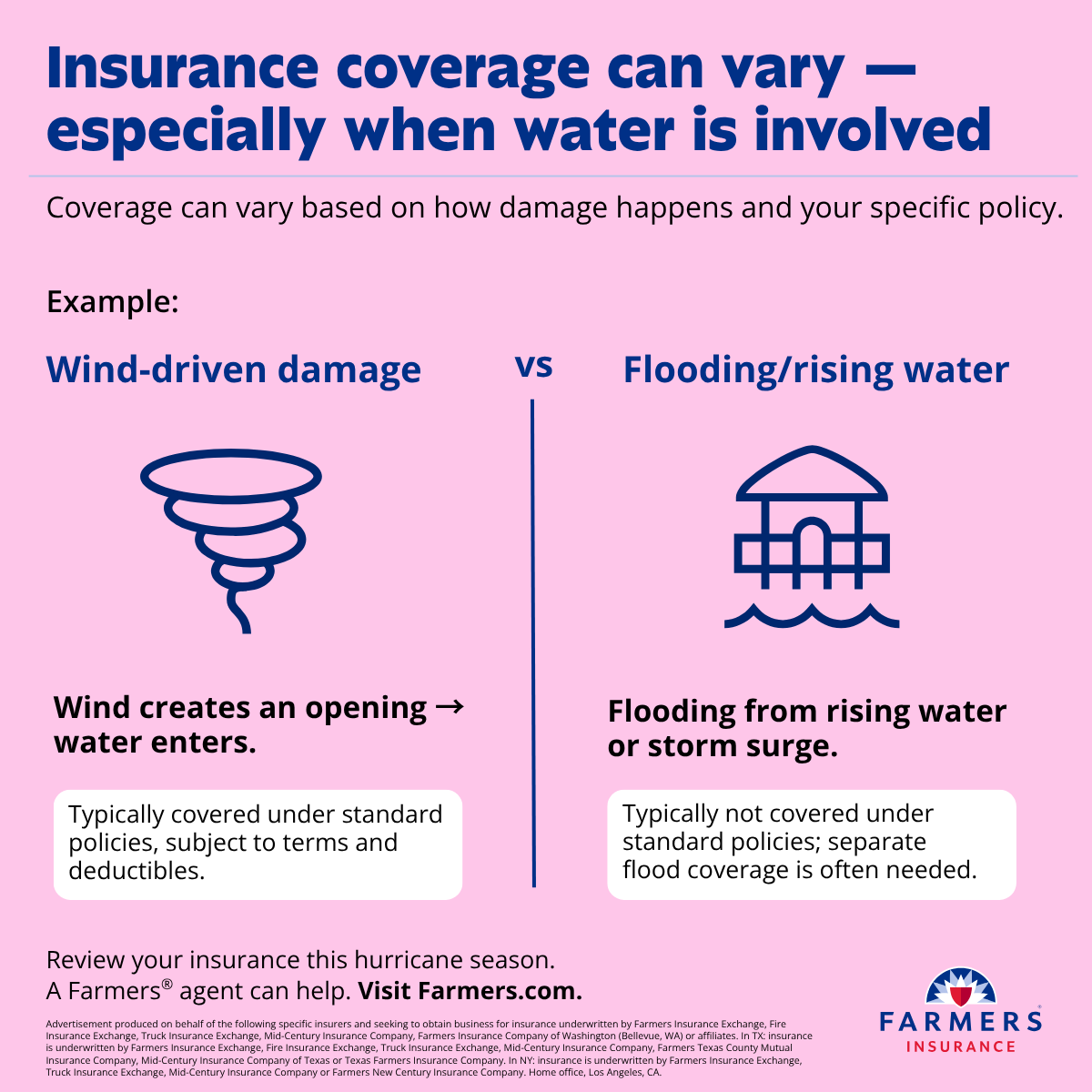
Insurance policies are written so that certain types of damage are covered and others aren't—and water-related damage can be especially important to understand. Homeowners and business insurance policies may cover certain hurricane-related damage, such as wind damage or water damage that results from a wind-created opening, but coverage can vary by policy, location and situation. In some higher-risk coastal areas, wind damage may require separate coverage, while flood damage from rising water or storm surge is typically not covered under standard homeowners or business policies. Understanding how your coverage actually works before a storm can help protect some of the biggest investments you've made—your home, your cars, your business, and more.
Backed by our proprietary claims insights, this guide is designed to help you cut through the most common misconceptions and take simple steps to prepare for hurricane season.


Quick hurricane prep tips you can save or share
Use these downloadable images as simple reminders to review your coverage, prepare before a storm, document damage and know what to do if you need to file a claim.
|
Click on graphic to download |
Click on graphic to download |
|
Click on graphic to download |
Click on graphic to download |
Flood insurance: An important coverage to check before hurricane season
Big myths—busted
Let's get real about some of the most common misunderstandings that can leave you exposed when a hurricane hits.
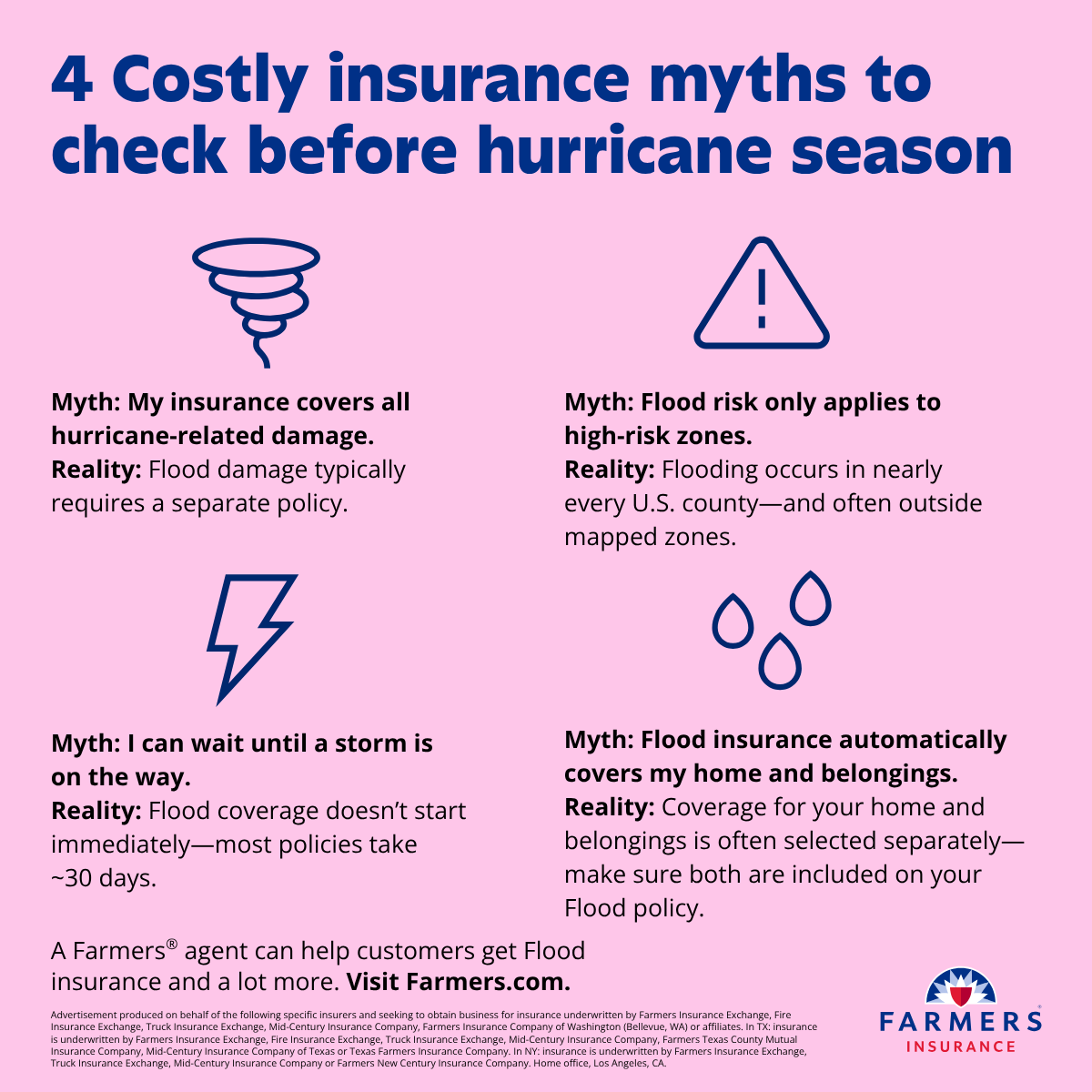
Myth: If I have homeowners or business insurance, I'm covered for all hurricane-related damage. Some hurricane-related damage may be covered, depending on the policy and cause of loss. For example, wind damage and water damage that enters through a wind-created opening may generally be covered, while flood damage from rising water or storm surge is typically not covered under standard homeowners or businessowners policies. Flood insurance is usually purchased separately.
Myth: If I'm not in a high-risk flood zone, I probably don't need to worry. Flooding is not limited to high-risk zones. According to FloodSmart.gov, nearly one-third of National Flood Insurance Program flood claims from 2014 through 2024 came from areas outside high-risk flood areas1.
Myth: I can wait until a storm is coming to add flood coverage. Although some private insurance carriers offer waiting periods as short as 7-days, there’s typically a 30-day waiting period between the purchase of a National Flood Insurance Program (NFIP) flood policy purchased through carriers like Farmers and when coverage becomes effective. This means waiting until a hurricane is imminent may be too late for coverage to be in place before the storm arrives.2
Myth: If I have flood insurance, my home and everything inside it is covered. Flood policies may treat building coverage and personal belongings as separate choices. If you want items like furniture, clothing or electronics covered for flood damage, review whether contents coverage is included—or ask about adding it.
Most homeowners don't have flood insurance—even though flooding happens almost everywhere
Here's a number worth knowing: according to a 2026 Insurance.com survey, roughly 78% of U.S. homeowners do not carry flood insurance—despite the fact that 99% of U.S. counties have experienced flooding3.
Flood damage is typically not covered under standard homeowners or business insurance policies. It requires a separate flood policy.
What is the NFIP? The National Flood Insurance Program (NFIP) is a federal program administered by FEMA that makes flood insurance available to property owners, renters, and businesses in participating communities across the U.S. NFIP policies cover direct physical damage caused by flooding—up to $250,000 for residential building coverage and up to $100,000 for contents4.
But the NFIP isn't the only option. Private flood insurance is also available and may offer different coverage limits, shorter waiting periods, or broader protections depending on your situation.
A Farmers Insurance agent has access to various flood policy options—including NFIP and private market alternatives. They're a great resource for helping customers understand what's available and finding coverage that fits their needs.
If you want flood coverage, don't wait until a storm is on the way
NFIP flood policies generally have a 30-day waiting period from the date of purchase before coverage takes effect. Some private flood policies may have shorter waiting periods, but moratoriums—temporary freezes on new policy issuance—can come into play when a storm is approaching2.
That's why the smartest move is to secure a flood policy proactively—before you need it.
Farmers claims data shows that hurricane-related claims historically peak in September5. Purchasing flood coverage well before peak season gives you the best chance of being protected when it matters most.
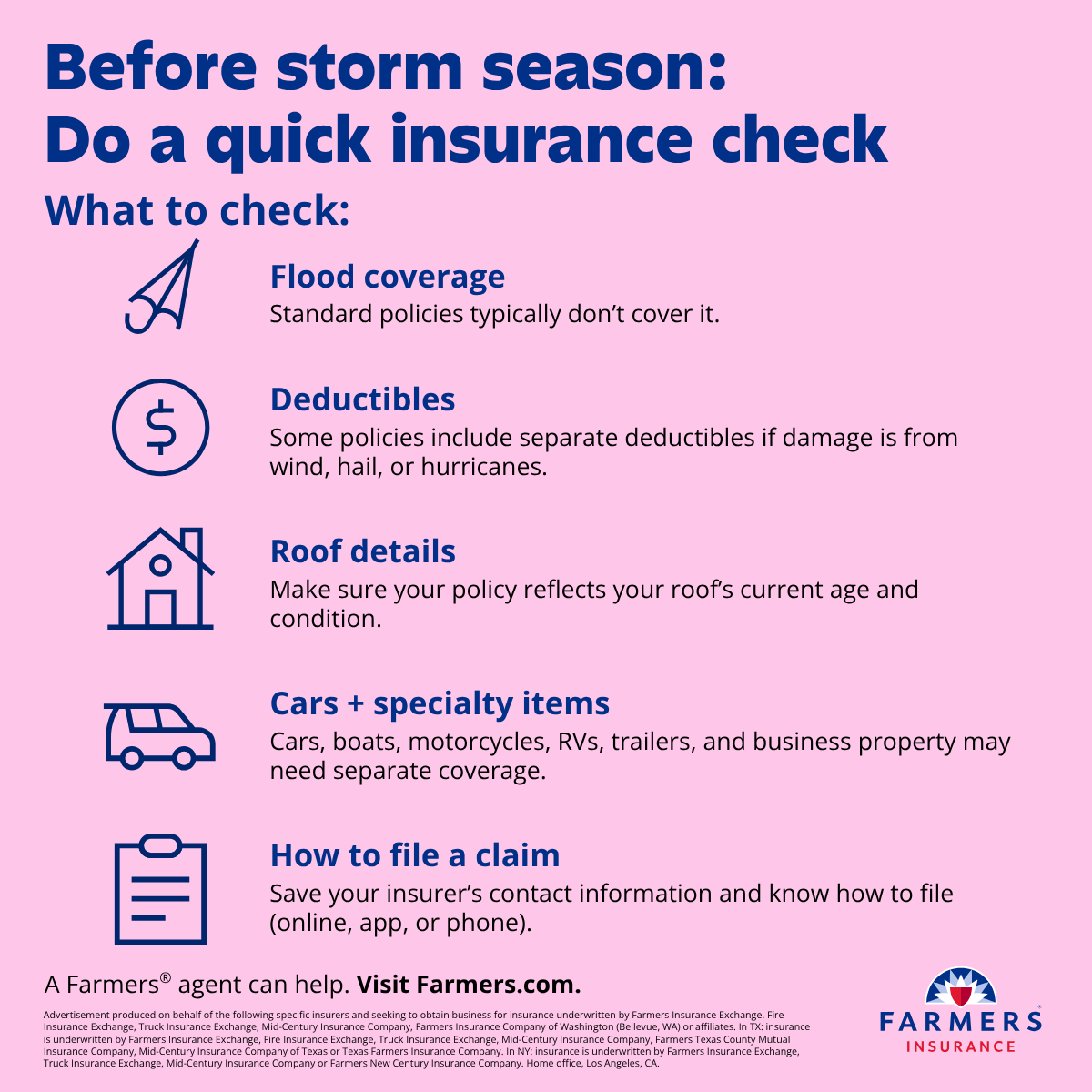
Before storm season: Do a quick insurance check
- Do I have flood insurance? Standard homeowners and business insurance policies typically do not cover flood damage.
- Do I understand my deductibles? Some policies may have separate wind, hail, or hurricane deductibles that could affect out-of-pocket costs after a storm.
- Is my roof information up to date? If you recently replaced your roof, make sure your policy reflects the correct roof age.
- Do I have insurance for car and specialty items? Cars, boats, motorcycles, RVs, trailers, or business property may each require different types of coverage.
- Do I know how to file a claim? Save your insurer’s claim contact information and confirm whether you can file online, through an app, or by phone. For example, Farmers customers can file a claim online at Farmers.com, or via the Farmers mobile app, or by calling.
Major insurance coverage topics to review proactively
Coverage can vary based on individual policies and circumstances. Some insurance details can have a significant impact if there’s damage to a home or car. As part of a proactive coverage review, here are a few key areas worth discussing with an insurance agent before storm season.
First, here’s where to look for coverage and deductible details on an insurance policy:
A declarations page is the summary page of a policy that lists coverages and deductibles all in one place. It's typically found at the start of the policy documents or available digitally through an insurer's online portal or mobile app, such as the Farmers® Mobile App available to Farmers customers.
Home insurance
- Roof damage is common during hurricanes—and roof age can affect coverage.
Roofs are often one of the first parts of a home to be damaged during a hurricane, whether from high winds, flying debris, heavy rain, or hail. Coverage can depend on the details of your policy and the age of your roof. In plain terms, an older roof may not be covered the same way as a newer roof, which can affect how much your policy pays if the roof is damaged.
- Make sure roof information on the policy is up to date.
If a homeowner replaced their roof in recent years, it's recommended they review their declarations page to confirm the roof age listed is accurate. Homeowners can let their insurance agent know if the information needs to be updated and be prepared to share supporting documentation.
- Understand policy deductibles ahead of time.
Some policies include a separate wind or hail deductible. Reviewing deductible amounts in advance can help set expectations about potential out‑of‑pocket costs after a storm.
- Fallen trees can create a costly chain reaction.
Downed trees and large limbs are a common source of hurricane damage—and the financial impact can extend beyond the roofline. Depending on the policy and cause of loss, homeowners insurance may help cover damage to the home, personal belongings inside, and other insured structures such as fences, decks, detached garages or sheds. Coverage may also help with tree removal when a tree damages an insured structure, though limits typically apply.
- Review how your policy treats trees, debris and landscaping.
Landscaping losses—including damage to trees, shrubs, bushes or lawns—may be subject to separate limits and may only be covered for certain causes of loss. Because these details can vary widely, homeowners should review how their policy treats fallen trees, debris removal, other structures, personal property and landscaping before severe weather arrives.
Car insurance
- Confirm comprehensive car coverage.
Hail damage to cars is typically covered under comprehensive coverage, not liability or collision.
- Review the comprehensive deductible.
Knowing this amount ahead of time can help owners understand what to expect if hail damages a car.
Business insurance
For business owners, hurricane risk is not only about physical damage to a building or property. A storm can also disrupt operations, interrupt income, damage inventory, and delay reopening—making it important to understand how business coverage may respond before severe weather arrives.
Business owners may want to review:
- Whether flood coverage is in place. Standard business insurance policies typically do not cover flood damage, so business owners should confirm whether separate flood coverage has been purchased.
- What triggers business interruption coverage. Business interruption coverage on a Businessowners Policy (BOP)—also known as business income insurance—may depend on the cause of loss and specific policy terms.*
- Property values, equipment lists, and inventory records. Keeping current records can help provide a clearer picture of what was damaged or lost if a claim is filed.
- Outdoor property or equipment exposure. Items stored outside or in vulnerable areas may need extra attention before a storm, especially if they are critical to daily operations.
Bottom line: For many business owners, the biggest challenge after a storm may not be just repairing damage—it may be recovering from downtime. Understanding how coverage works ahead of time can help business owners make more informed decisions and prepare for a faster recovery.
*NFIP flood policies do not include business interruption or business income coverage. Standard BOPs typically include business interruption coverage, but coverage depends on the cause of loss and the specific terms, conditions and exclusions of the policy.
Hurricane safety plan: Simple steps to prepare before a storm
A little preparation can make it easier to act quickly if a hurricane or severe weather is headed your way. Drawing on hurricane preparedness guidance from Ready.gov6, here are a few critical ways to prepare before a storm.
- Make a household emergency plan. Know where you’ll go if you need to take shelter, evacuate, or meet up if your family gets separated.
- Stay alert to changing weather conditions. Monitor trusted local weather updates, emergency alerts, and evacuation notices—especially if a storm’s path or strength changes quickly.
- Know when and where to take shelter. Identify a safe interior room on the lowest level of your home, away from windows, in case of high winds or tornado warnings.
- Avoid driving when dangerous weather is approaching. If there’s an imminent hurricane threat, stay off the roads if you can. If you’re already driving, never drive through floodwater, watch for downed power lines or debris, and follow guidance from local officials about when it’s safe to continue or seek shelter.
- Build or refresh your emergency kit. Include water, nonperishable food, flashlights, batteries, medications, first-aid supplies, phone chargers, important documents, and supplies for pets or children.
- Prepare your home before weather arrives. Secure outdoor furniture, clear gutters and drains, trim loose branches if safe to do so, and protect windows as recommended by local officials.
- Plan for power outages. Charge devices, have backup batteries available, and know how to safely use generators outdoors and away from windows.
- Follow evacuation guidance. If local officials issue an evacuation order, leave as directed and avoid driving through flooded roads.
Bottom line: Hurricanes can change quickly. Having a plan—and keeping an eye on reliable weather alerts—can help you make safer decisions when conditions shift.
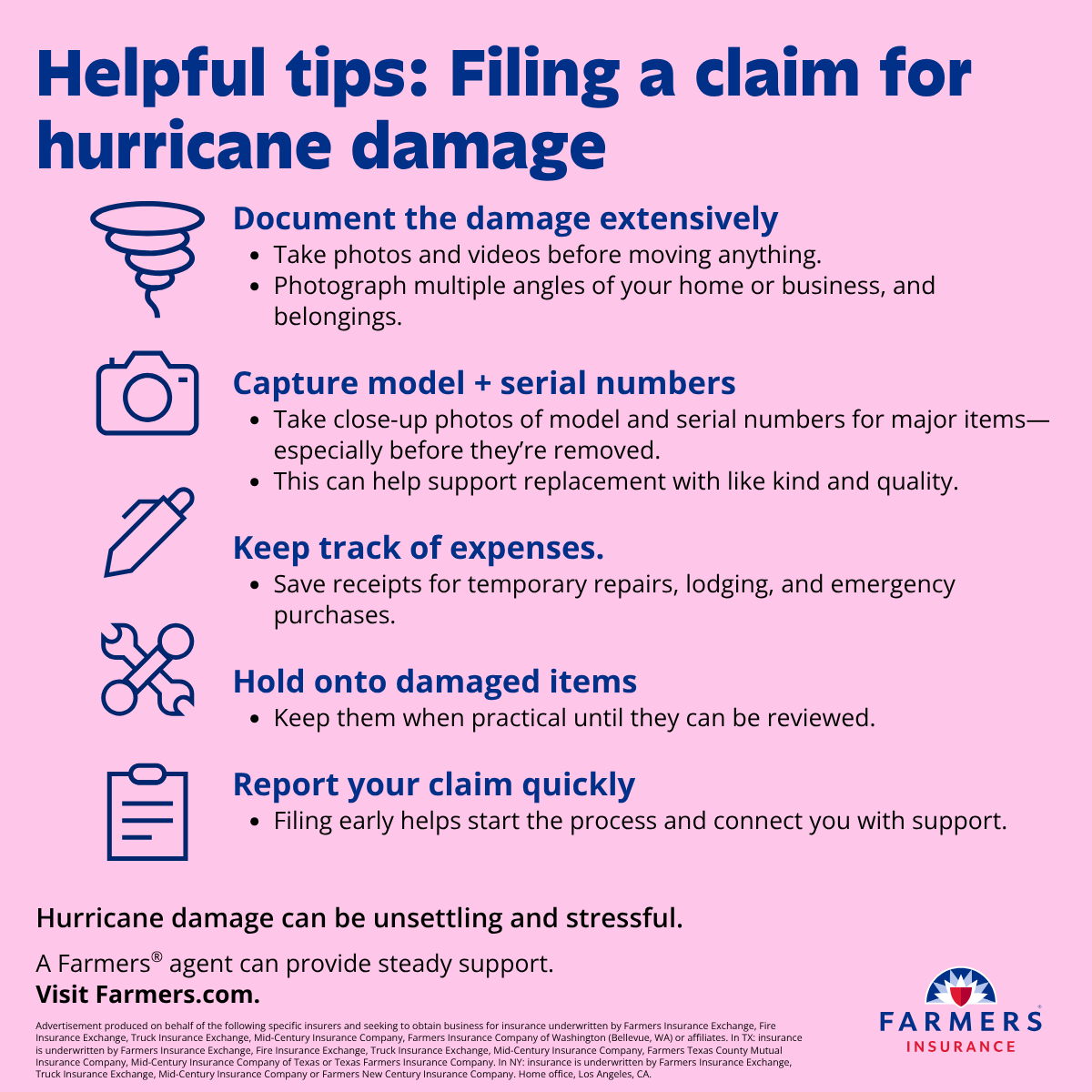
Tips for filing a claim after hurricane damage: Document everything before you clean up
When damage happens, it's natural to want to start cleaning up right away. But taking a few minutes to document what you see can make a meaningful difference during the claims and recovery process.
What helps:
- Take photos and videos of damaged areas before moving or repairing anything.
- Capture multiple angles of your home, business, and affected belongings.
- Photograph model and serial numbers on major items—especially before they’re removed—to help support replacement with like kind and quality.
- Keep receipts and records for any temporary repairs, lodging, or emergency purchases.
- Hold onto damaged items when practical, until they can be reviewed.
- Report your claim as soon as possible so the process can begin and a claims representative can guide you through next steps.
These steps can help provide a clearer picture of the damage as claims representatives review your policy and assess what comes next.
💡 Good to know: Documenting damage does not determine coverage—but it can help your claim be reviewed with the most complete information available.
A Farmers agent can help you explore coverage options—including home, business, and flood insurance
Insurance decisions don't have to be complicated—but it helps to have a full picture. A Farmers Insurance agent can work with you to review coverage across multiple needs—not just a single policy—including:
- Homeowners insurance, which may cover damage from risks like wind but typically does not include flood damage
- Flood insurance options, including NFIP and private market policies
- Auto insurance, where comprehensive coverage is typically needed to cover hurricane-related vehicle damage
- Business insurance, including considerations for property damage, business interruption, and more
- Specialty coverage for boats, motorcycles, RVs, and other recreational vehicles
The best time to understand your insurance coverage is before you need it. Talk with a Farmers agent to review your policies and prepare for the season ahead.
Sources:
1 FloodSmart.gov, “What Is My Flood Risk?” citing National Flood Insurance Program flood claims from 2014–2024, https://www.floodsmart.gov/flood-zones-and-maps/what-is-my-flood-risk.
2 National Flood Insurance Program, “Fast Facts on Floods & Flood Insurance”; https://agents.floodsmart.gov/sites/default/files/media/document/2025-07/fema-nfip-fast-facts-flood-insurance-infographic-11-2024.pdf
3 Insurance.com, Most homeowners still don't have flood insurance even in high-risk areas, https://www.insurance.com/home-and-renters-insurance/natural-disasters/flood-insurance/many-homeowners-cancel-flood-insurance-despite-rising-risk
4 FEMA, Flood Insurance, https://www.fema.gov/flood-insurance
5 Based on Farmers Insurance internal claims data from the past three years.
6 Preparedness guidance adapted from Ready.gov, “Hurricanes”; https://www.ready.gov/hurricanes