Tornado Preparedness: What Homeowners and Drivers Should Know
As severe weather affects more communities, preparation and coverage awareness matter more than ever.

Tornadoes have long been associated with certain parts of the country, but recent severe weather events across the U.S. are reminding homeowners and drivers that tornado risk isn’t limited to one region or season. While Farmers Insurance® does not forecast weather or track tornado frequency, our claims experience reflects how tornadoes and severe storms can impact homes, vehicles, and specialty property in many communities — often with little warning.
This page provides preparedness guidance, safety considerations, and high‑level context from Farmers’ claims experience to help consumers better understand how to prepare before storm season.
Preparedness Matters — Wherever You Live
Insurance industry organizations and federal weather agencies consistently emphasize that tornado preparedness is important no matter where you live. Tornadoes can form quickly, occur outside traditional peak months, and cause damage through high winds, hail, and flying debris.
Simple steps can help reduce risk and speed recovery:
- Create a tornado safety plan and identify a safe shelter area, such as a basement or interior room on the lowest level.
- Sign up for local weather alerts and NOAA Weather Radio1 notifications.
- Secure outdoor items that could become airborne during high winds.
- Keep important documents and a home inventory stored digitally.
- Save receipts for major purchases. Keeping receipts or proof of purchase for
high‑value items like televisions, appliances, or electronics can help support your claim and speed up the claims handling process if damage occurs.
What Farmers’ Claims Experience Shows
Obviously, Farmers cannot provide forecasts or assessments of tornado frequency. However, at a high level, our claims experience underscores that*:
- Tornado-related damage can occur in a variety of regions, including areas not traditionally associated with tornado activity.
- Tornado losses often occur alongside other severe weather, such as hail and straightline winds.
- Storm impacts are not limited to a single season, reinforcing the importance of year-round preparedness.
Safety Tips for Tornado Events
Following guidance from the National Weather Service and emergency management agencies can help keep people safer when tornadoes threaten.
| If a tornado warning is issued: | If you are driving during severe weather2: |
|---|---|
|
|
Review Coverage Before Storm Season
Understanding insurance coverage before severe weather strikes can help reduce stress and confusion after a loss.
Coverage areas to review include:

Homeowners insurance
Helps pay to repair or rebuild your home if damaged by covered storm events.

Personal property coverage
Helps you cover belongings damaged or destroyed by wind or debris.

Additional living expenses
Helps to pay for temporary housing if a home is uninhabitable after a covered loss.

Auto coverage
Could provide coverage for vehicles damaged by severe storms, including hail, falling trees, and flying debris that often accompany tornadoes.

Specialty products
Boats, motorcycles, RVs, and other specialty property may also be exposed during severe weather and may require separate coverage.
A Farmers Insurance agency owner can help answer coverage questions and support customers who want to align their policies with current needs.
Building Resilience at Home
Strengthening homes against severe weather can help reduce damage. Organizations like the Insurance Institute for Business & Home Safety (IBHS) recommend steps such as reinforcing roofs, securing garage doors, and considering resilient construction standards when building or renovating.
“Preparedness and resilient construction can make a meaningful difference when severe weather occurs,” said Greg Panhaussen, Head of Property Product at Farmers Insurance and a member of the Board of Directors for the Insurance Institute for Business & Home Safety (IBHS). “Understanding your coverage and taking steps to strengthen your home can help protect what matters most.”
Trusted Tornado Safety Resources
For up-to-date safety guidance and alerts, Farmers encourages consumers to check the following resources:
- National Weather Service (NWS)
- NOAA Weather Radio
- State and local emergency management agencies
*About the Data
Farmers’ analysis is based on homeowners tornado-related claims activity from 2019–2025. Claims data reflects insured customer losses and observed claims patterns and does not represent tornado frequency or forecasts.
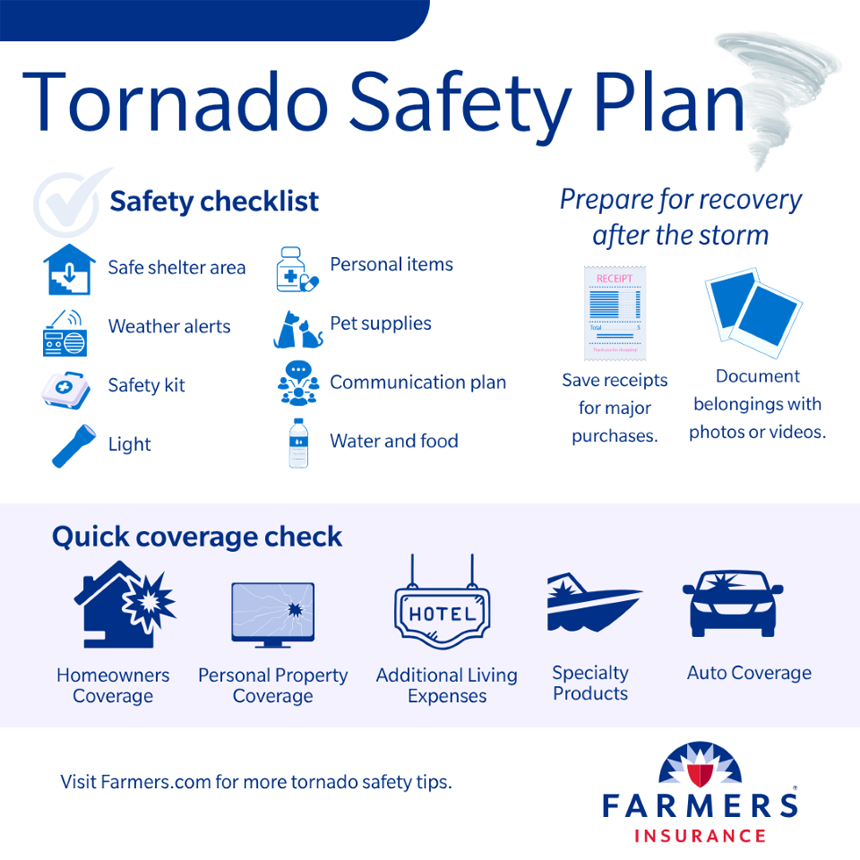
Click on graphic to download
1National Oceanic and Atmospheric Administration (NOAA) Weather Radio provides continuous, official weather alerts directly from the National Weather Service, including tornado warnings that activate automatically when danger is imminent. Alerts are broadcast through dedicated weather radios, which consumers can receive by purchasing a NOAA Weather Radio receiver for their area. (https://www.weather.gov/nwr/)
2National Weather Service (NWS). Tornado safety guidance for drivers. National Oceanic and Atmospheric Administration. https://www.weather.gov/safety/tornado-during