Hail Preparation Insights
Understand hail risk, review insurance coverage, and take proactive steps to protect your home and car before severe weather strikes.

Spring and early summer are peak hail season across many parts of the U.S., with storms capable of producing hailstones large enough to damage roofs, siding, windows, cars, and more. Drawing on Farmers Insurance® claims experience and trusted weather and building‑science research, these hail preparation insights are designed to help homeowners and drivers better understand their risk—and their insurance—before a storm hits.
Why Hail Deserves Attention
Hailstorms are among the most common and costly severe weather events, often damaging multiple types of property at once. Hail damage to roofs and cars is especially common during strong thunderstorms, when wind can drive hailstones at high speed into homes and cars.
Hailstones can range from small pellets to softball‑size impacts1, and even smaller hail can weaken roofing materials over time, increasing the risk of leaks and future repairs.
Insurance Coverage Topics to Review Before a Hailstorm
Insurance coverage can vary by policy, roof age, and deductible structure. A brief review before storm season can help avoid surprises later.
Does Homeowners Insurance Cover Roof Hail Damage?
When it comes to home insurance for hail damage, consider checking:
- Roof coverage and roof age - Older roofs may be handled differently than newer roofs depending on policy terms and endorsements.
- Wind or hail deductibles - Some policies include a separate hail deductible, often structured as a percentage of the home’s insured value rather than a flat dollar amount.
- Policy details on the declarations page - The declarations page summarizes coverages, limits, and deductibles in one place and is typically the first page of your policy documents.
Does Car Insurance Cover Hail Damage?
For hail damage to cars, it’s important to know:
- Hail damage is typically covered under comprehensive car insurance, not collision or liability.
- Reviewing your comprehensive deductible ahead of time can help set expectations if a claim is needed.
Coverage for recreational vehicles such as boats and motorcycles may differ from home and car policies and often requires separate review.
How to Know When Hail May Be Coming
Hail most often forms during strong thunderstorms, making weather alerts, local forecasts, and visible storm activity important signals to watch. Staying weather‑aware can provide valuable time to move cars, secure property, or seek shelter before hail begins.
Practical Steps to Reduce Hail Damage
Before a Storm
|
After a Storm (When It’s Safe)
|
These steps can help limit additional damage and support a smoother hail insurance claim process if repairs are needed.
Planning Ahead: Building for Better Hail Resistance
When replacing or improving a roof, homeowners may want to consider options shown to perform better against hail. Research from the Insurance Institute for Business & Home Safety (IBHS) suggests that roofs tend to be more resilient when:
- Roofing materials are tested to replicate real hail impacts, including size and speed.
- Proper installation and secure attachment practices are used.
- Roofs are well maintained as they age, addressing wear before storms occur.2
IBHS also developed the FORTIFIED Roof™ standard3, which incorporates research‑based construction techniques intended to improve roof performance in severe weather, including hail.
Talk With an Insurance Agent Before Storm Season
An insurance agent can help homeowners and drivers:
- Review current home and car insurance coverage
- Confirm deductibles and limits
- Ensure policy information—such as roof age—is up to date
Taking time to review coverage before hail season can make it easier to navigate repairs and recovery if severe weather occurs.
A Farmers Insurance agency owner can help answer questions and review coverage options based on individual needs.
Hail storms may be unpredictable, but understanding the risks and taking simple steps before storms occur can help reduce stress and make recovery easier when severe weather strikes.
Quick Answers to Common Hail Insurance Questions
Does homeowners insurance cover hail damage?
In many cases, standard homeowners insurance covers hail damage to roofs, siding, personal property, and windows, subject to policy terms, conditions, and deductibles.
Does car insurance cover hail damage?
Hail damage to cars is typically covered under comprehensive car insurance, not collision or liability coverage.
If I have hail damage to my home or car, what should I do?
- Once it’s safe, inspect your property and take photos or video of any visible damage.
- Most homeowners insurance policies state it’s the policyholder’s responsibility to take reasonable steps to prevent further damage—for example, placing a tarp over a hole in a roof or damaged siding.
- If you hire someone to make temporary or emergency repairs, keep all receipts.
- You may also want to gather receipts or documentation for larger items that were damaged, which can be helpful to share with a claims representative when you file a claim.
- To start the claims process, file a claim with your insurance carrier—Farmers customers can file a claim by calling Farmers or submitting a claim online at Farmers.com.
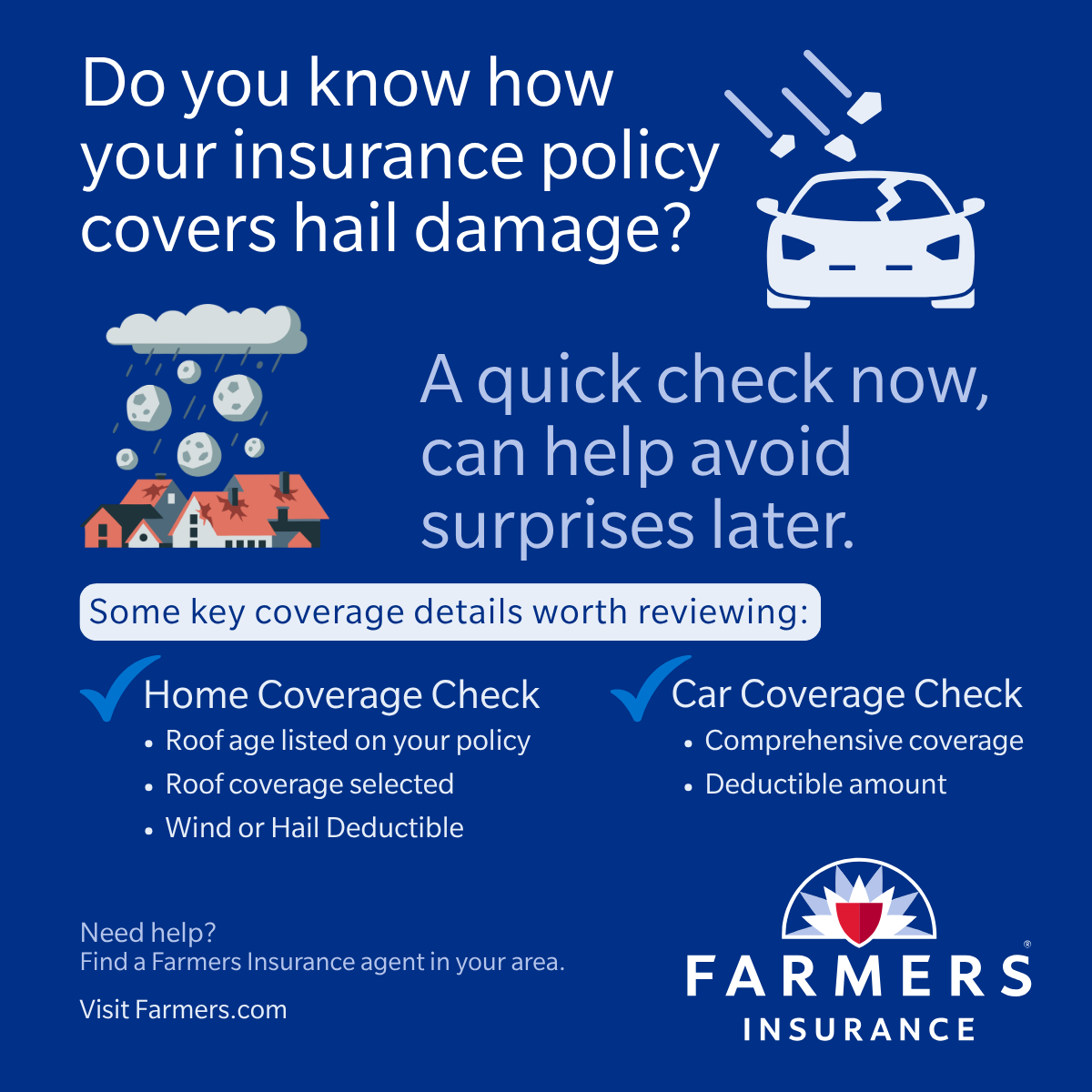
Click on graphic to download
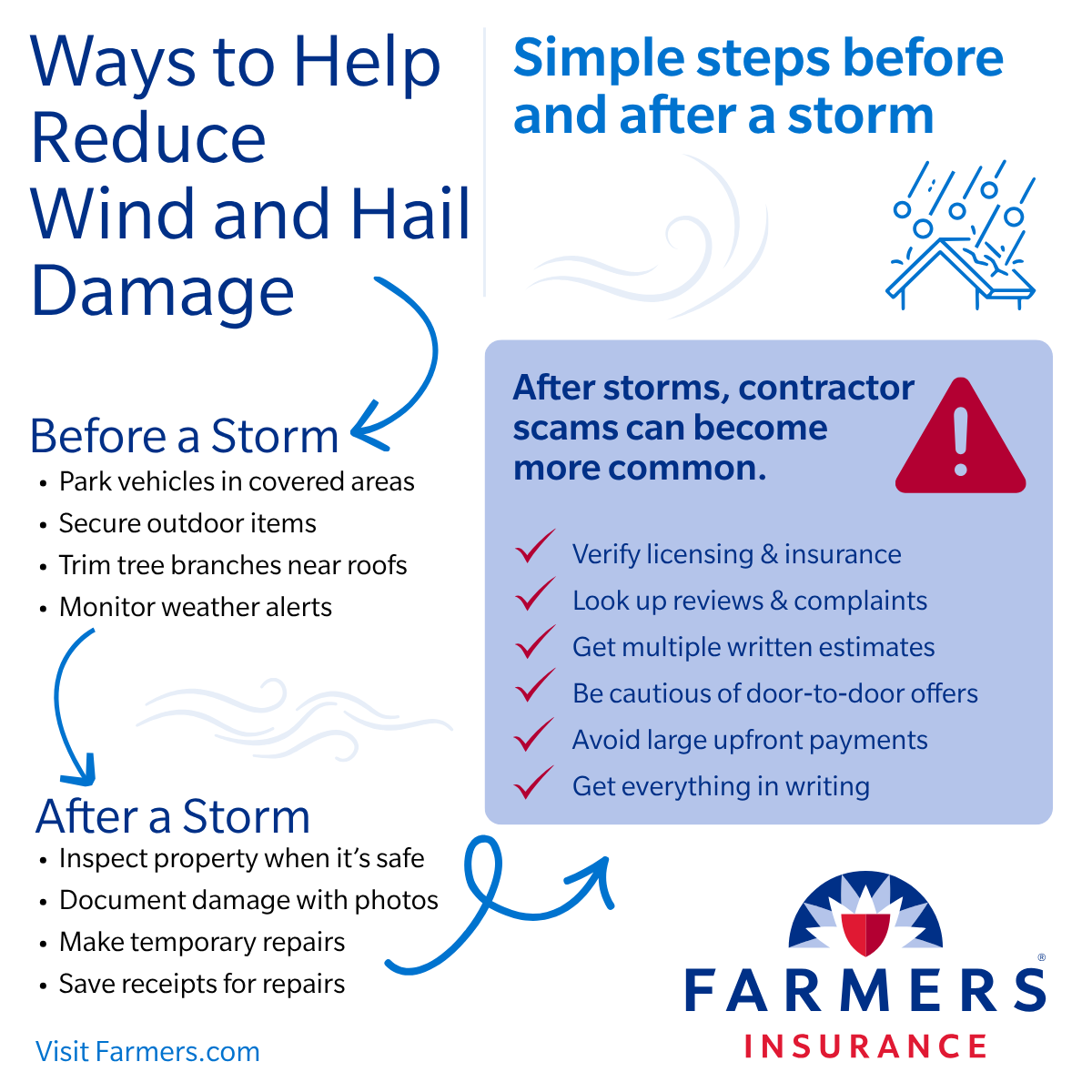
Click on graphic to download
Sources:
1 National Oceanic and Atmospheric Administration (NOAA) https://www.noaa.gov/jetstream/hail
2 Insurance Institute for Business & Home Safety (IBHS), Hail Research Overview https://ibhs.org/risk-research/hail/
3 IBHS FORTIFIED Roof™, https://fortifiedhome.org/roof/